
Going Long With Summer Wesson
Summer Wesson on Kayaking 50+ Catalina Channel Swims, Building Community in San Diego, and Why Your Kayaker Should Never Be an Afterthought…
There is a moment at the end of every successful channel crossing that Summer Wesson says she never gets tired of. The swimmer clears the waterline. The horn sounds from the boat. And from her kayak, just a few feet away, she gets to see it happen up close in a way that nobody else on the support team does.
She has had that moment more than 50 times at the Catalina Channel alone.
Summer Wesson is one of the most experienced open water support kayakers on the West Coast. She has kayaked over 50 Catalina Channel crossings, served as a crew chief, and worked as an official observer. She is a marathon swimmer herself and a founding board member of the San Diego Open Water Swimming Association. This November she is coming to Beyond the Breakers for the first time in person, presenting alongside Dan Simonelli on kayak and crew support.
I sat down with Summer for an episode of Going Long, our interview series featuring the speakers you will see on the stage at Beyond the Breakers in November. What she shared is something I think every open water swimmer and aspiring kayaker needs to hear.
Who Is Summer Wesson?
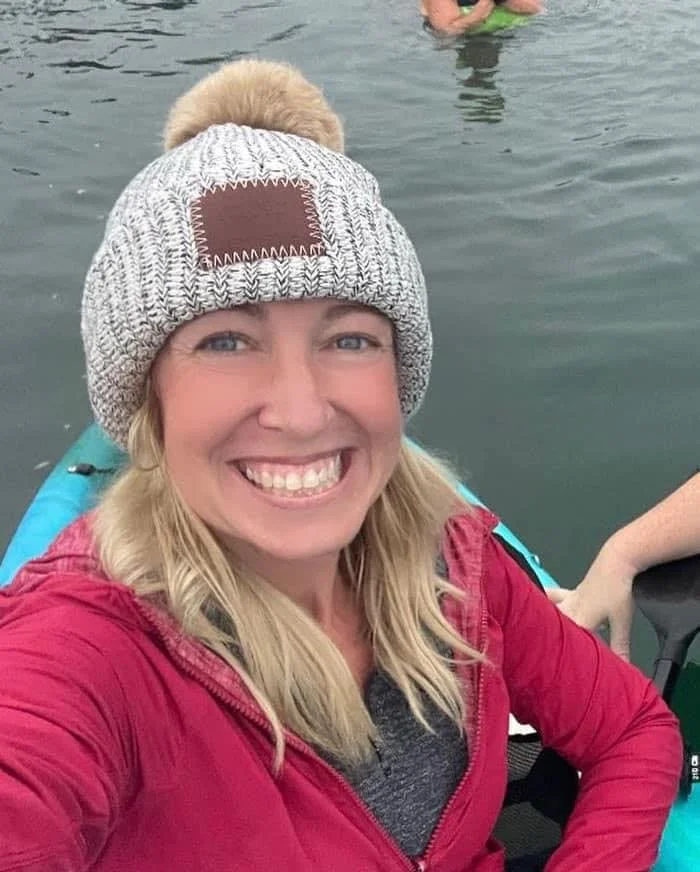
Summer Wesson is a marathon swimmer and expert support kayaker based in San Diego, California. She has kayaked over 50 Catalina Channel crossings, served as an official observer for marathon swims, and worked as crew chief on major open water events across Southern California and the San Francisco Bay Area. She is a founding board member of the San Diego Open Water Swimming Association, which she helped create alongside Dan Simonelli, Jeff Rake, and Karianne Scheevel.
Before becoming one of the most trusted support kayakers in the sport, Summer spent 20 years in the entertainment industry. She retired early during COVID, relocated to San Diego, and found open water swimming after a trail running injury ended her running career. She completed the Around Coronado swim as her first marathon swim and has since focused primarily on warm water events while continuing to support Catalina crossings as a kayaker and observer.
How a Knee Injury Changed Everything
Summer's path into open water swimming is one I hear more often than people might expect. She was a long-distance trail runner. A freak fall on a trail injured her knee badly enough that her orthopedic doctor told her running was likely no longer an option.
"He said, you know what, you're probably not going to be able to run anymore, but you can swim to Catalina for all I care," she said. "And a dream was born."
That offhand comment from a doctor sent her into open water swimming. She completed the Around Coronado swim as her first marathon swim and has been building in the sport ever since. She gravitates toward warm water events for her own swimming but has developed a deep passion for supporting the colder, longer Catalina crossings from the kayak.
It is a path that gave her something most pure kayakers do not have. She knows what it feels like to be the swimmer. She knows the fear that comes with jumping off a boat into cold dark water in a place you have never swum before. She knows what it is to trust a stranger with your safety in the middle of the ocean. That understanding shapes everything about how she supports the athletes she works with.
The Path to Becoming a Catalina Kayaker
Becoming a trusted Catalina kayaker does not happen overnight. Summer was very clear about that and honest about the process she went through to build the skills and experience to do it at the level she does now.
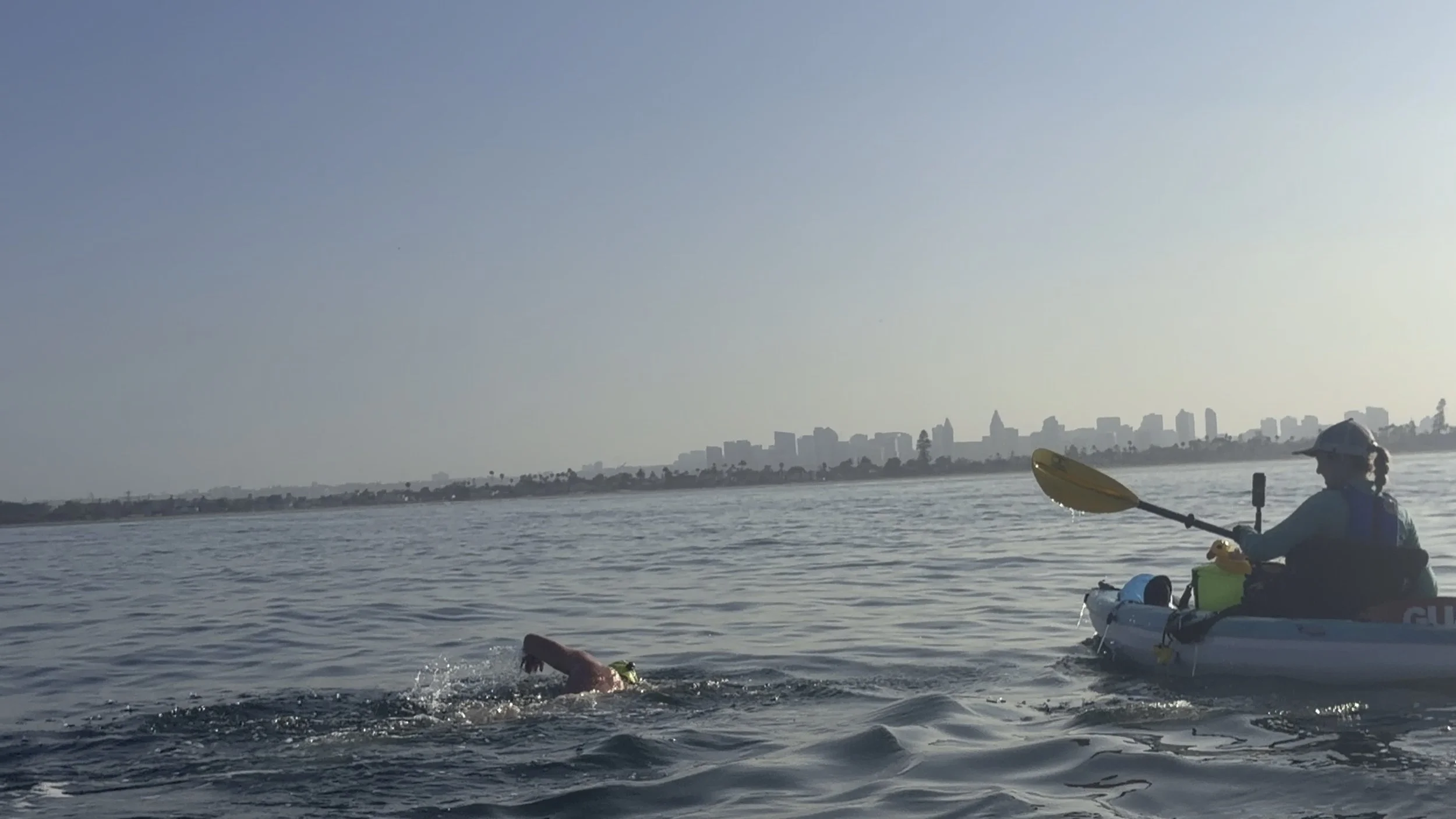
She started on the boat itself, supporting Catalina swims from the deck before ever getting in the water as a kayaker. Then she moved to relay swims with friends, lower stakes situations where she could get the experience of tracking with a swimmer without the full responsibility of a solo channel attempt. She watched and learned and waited until she felt genuinely ready.
"My biggest fear was that I had heard stories about swimmers who DNFed because their kayaker had capsized and couldn't get back on," she said. "They were treading water, they got cold, and it ended up not working out. I am never going to be that person."
She mentioned two specific skills she considers non-negotiable for anyone who wants to kayak major open water swims. The first is learning how to get on and off the boat cleanly in ocean swells. The second is learning how to track with a swimmer without constantly bringing them in and out through the swell pattern as the boat repositions. Both take time to develop and there is no shortcut.
Her most important piece of advice for aspiring kayakers is both simple and something most people skip.
"Capsize yourself in the dark, in crazy conditions, with all the feeds and lines and everything, and make sure you can get back on that kayak," she said. "The best of us capsize out there. But if you can recover it quickly, you are good to go."
What Swimming Experience Teaches a Kayaker
I asked Summer whether her background as a swimmer made her a better kayaker. She did not hesitate.
"There is a definite difference in the kayakers that have the experience of being in the water and going through those motions," she said.
She described the moment when a swimmer jumps off a boat in Southern California waters for the first time. They do not know the threats in the water. They do not know what to expect. They are trusting the kayaker to make decisions on their behalf for the next eight, twelve, or sixteen hours. A kayaker who has been in that water as a swimmer understands that trust in a way that a pure paddler simply cannot.
She also turned the point around. She thinks it is equally important that swimmers get some experience on the support side. Not necessarily kayaking, but crewing or observing, so they understand what their support team is actually going through during a major swim. It creates a partnership rather than a transaction.
Connecting With a Swimmer You Have Never Met
One of the things that struck me most in our conversation was how deliberately Summer approaches the relationship with a swimmer before she ever gets in the water with them. For a lot of Catalina crossings she is working with someone she has never met. She is their closest support for an entire night and potentially an entire day. That relationship has to be built quickly and intentionally.
She does her homework before every swim. She checks social media. She has conversations in advance to get a feel for the swimmer's personality, what excites them, what scares them, and what kind of support they need in the water.
"If you are super scared of sea lions, that is completely fine," she said. "I just will not point out the sea lion and freak you out in the middle of your swim. Those little pieces of connection before the swimmer jumps in with this stranger are extremely important."
She shared a story from early in her Catalina kayaking career that stayed with me. She was kayaking for a group of high school relay swimmers, one of whom was a nervous 14-year-old doing her first night ocean crossing. The team was the Pirates of the Catalina and Summer had shown up with a pirate hat. When the transition came and a different kayaker was supposed to take over, the girl panicked. She wanted the pirate. She wanted the person she had connected with.
They made it work. The girl swam beautifully through the night and became a well-oiled machine by daytime. But the point was clear. The connection between kayaker and swimmer is not a small thing. It can be the difference between a swimmer who pushes through and a swimmer who does not.
The Mistakes She Sees Most Often
I asked Summer to break down the most common mistakes she sees, both from new kayakers and from swimmers who are new to having kayak support. She gave me both.
On the kayaker side she sees two opposite problems. The first is the kayaker who is so nervous about making a mistake that they are paralyzed and underconfident. The second is the experienced recreational paddler who assumes their kayaking background is enough and does not appreciate how different supporting a marathon swimmer in open ocean actually is.
"What I will say to both ends is that it comes down to focus," she said. "You cannot be off in your own world or listening to music. You need to be present. And listening will tell you a lot. If you hear a stroke rate change, you look over. That cue tells you something. It could be that they stopped for a second or there could be a breakdown happening. It gives you cues to help them."
On the swimmer side the mistake is treating the kayaker as an afterthought.
"Who you get into the water with you should have full trust with," she said. "Tell them your fears. Tell them if certain things scare you. If you are having an issue in the water, look up and tell them. Chances are I have already looked at your plan and I am troubleshooting what might happen. I probably have something on the kayak that will help you. Help me help you."
She also gave one of the most practical pieces of advice I have heard for evaluating potential kayakers. Watch how responsive they are to your first contact. The ones who take the time with you, who answer all your questions, who are clearly invested in your swim before you have even started planning, are the ones you want in the water with you.
The San Diego Open Water Swimming Association
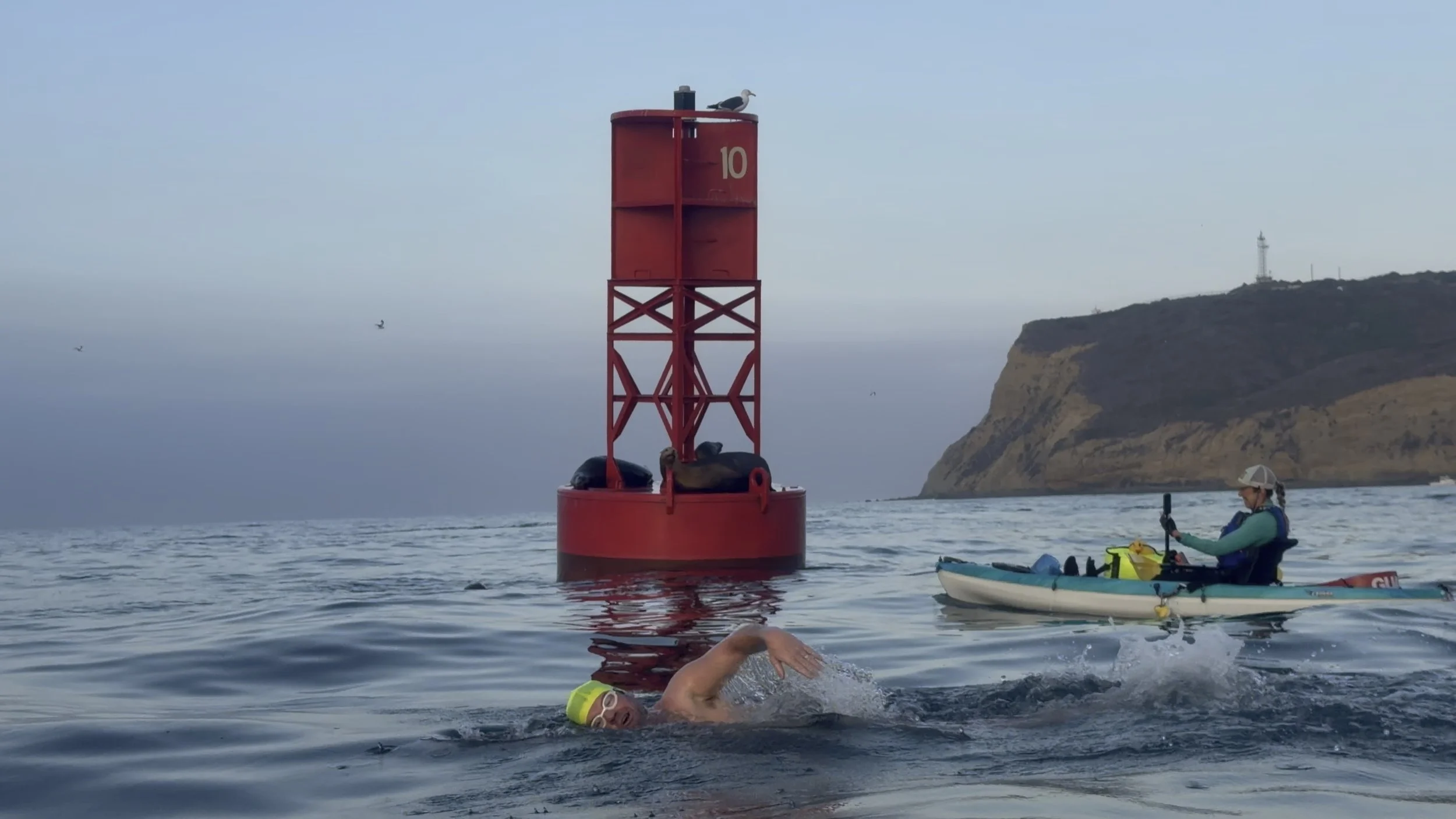
The San Diego Open Water Swimming Association did not start with a formal plan. It grew out of a community that needed a place to go.
During COVID, Dan Simonelli revived the Around Coronado swim as an event when channels around the world were being cancelled or made inaccessible. Swimmers came. The event gained popularity. People started asking what came next. Abby Fairman, an accomplished marathon swimmer, was the first to complete what is now known as the San Diego Triple Crown, a series of three swims in the 10 to 12 mile range designed by Dan.
The three swims are the Around Coronado, the Point Loma to Ocean Beach swim known as PLOB, and the Boomerang, which runs from La Jolla Shores to Crystal Pier and back. All three serve as excellent training swims for athletes preparing for the Catalina Channel or the English Channel. They can also be used as qualifiers with extended durations if needed.
As the community grew it became clear that Dan's expertise was being underused. He has supported over 300 Catalina swims. He is a Hall of Fame coach. He is a kayaker and observer. A small group came together and created the San Diego Open Water Swimming Association to give the community a formal home and a resource for swimmers at every level.
"Our community now has a place to go when they are starting out or have questions, or even if they have been swimming for a long time and want support to do something long," Summer said.
I have been to San Diego twice and I swam around Coronado myself with Summer kayaking for me. The swims are beautiful. The organization is run by people who genuinely love the sport. If you have a major swim on your calendar and are looking for quality training miles in warm water with expert support, go to sdosa.org and see what they have available.
Her Session at Beyond the Breakers 2026
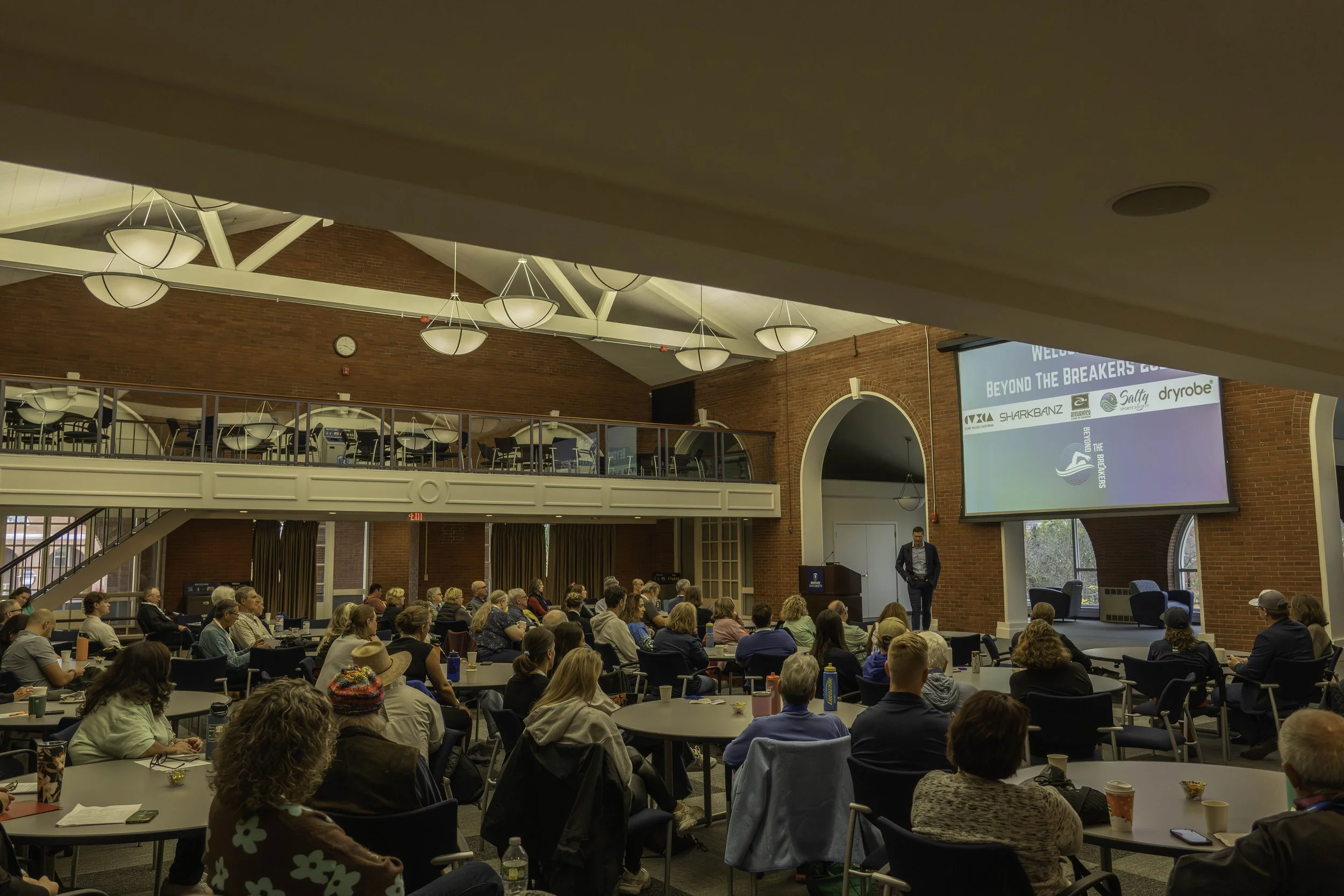
Summer is presenting at Beyond the Breakers 2026 alongside Dan Simonelli. Their session covers kayak and crew support, one of the most valuable and most underserved topics in open water swimming education. You can go to dozens of open water swimming events and never hear a proper session on what it takes to support a swimmer from the water.
"I am hoping that what we have to offer is very helpful for people that are both more seasoned and those that are starting out," she said. "A lot of people are intimidated by the idea of kayaking a channel. We just want to share our stories because the only way you get that expertise is to be out there doing it."
She also wants to reach the swimmers who will be in the room. Understanding what a kayaker goes through in the middle of the night on the Catalina Channel changes how you prepare for your crossing and how you treat the person who is going to be out there with you.
When I asked her which speaker she is most excited to see at the event the answer was the same one I have heard from almost every speaker this year.
"I am super excited to meet Rowdy Gaines," she said. "Growing up he was synonymous with swimming and he has been an advocate for the sport his entire life. With us developing the San Diego Open Water Swimming Association, being there to gain his expertise and perspective is going to be incredibly valuable."
The Taco Bell Torpedo
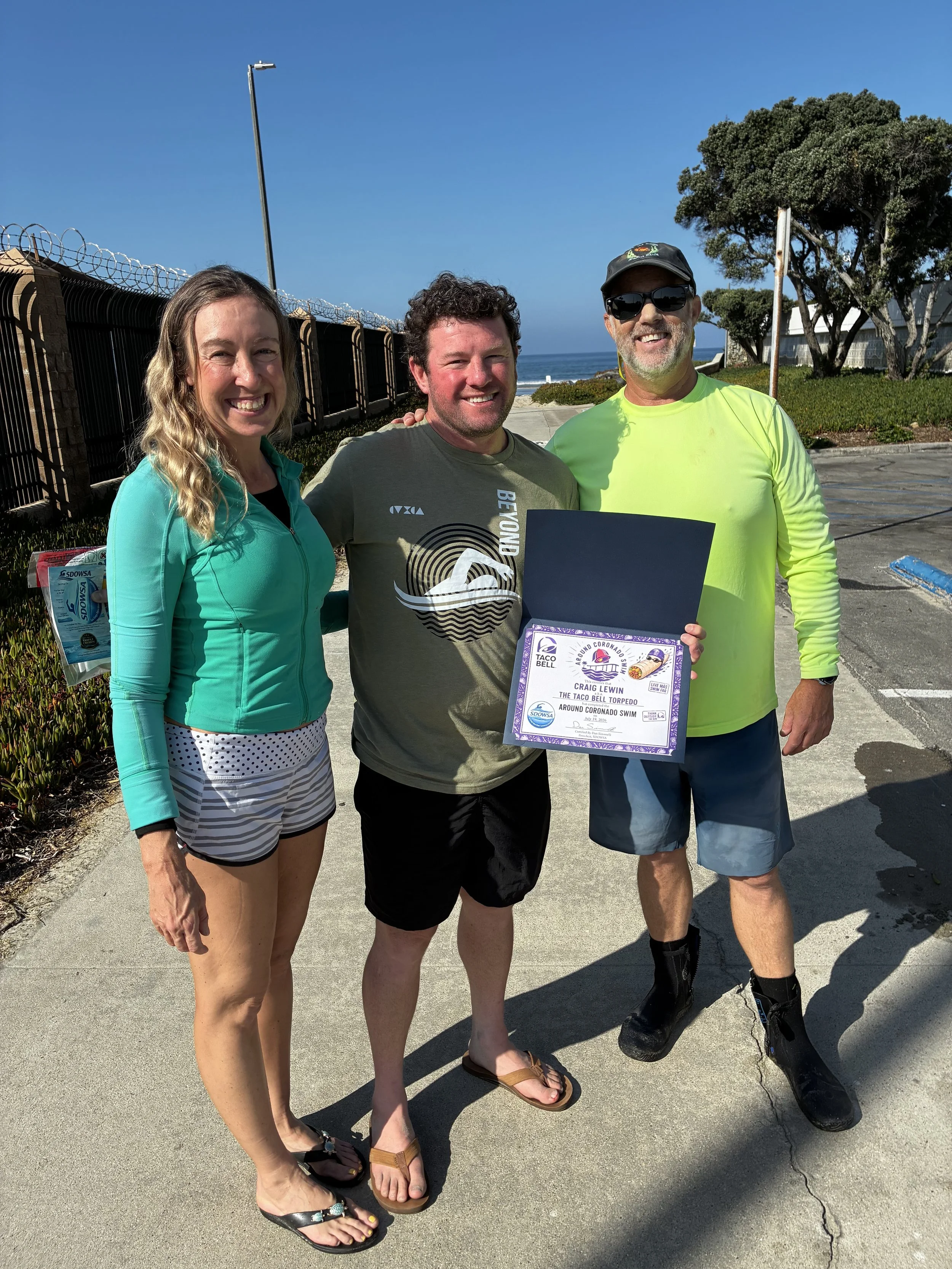
I could not let Summer go without talking about our Around Coronado swim together. For those who do not know, I completed the Around Coronado in a Taco Bell sponsored swim that earned me the nickname the Taco Bell Torpedo. Summer kayaked for me.
Her review of the experience was genuinely kind and something I will hold onto.
"You slept all the way to the start," she said. "I don't know how any athlete can do that but it says a lot. And you just found a little gimmick that got you through and made it fun. It was stress-free. It was a good time. And not to quote Dan, but it's important to find the fun when you're out there. I feel like we had a pretty good time."
We did. And I am glad she was there for it.