
Going Long With Laurie Craigen
Thriving in Fear
When Dr. Laurie Craigen crossed the English Channel in September 2024, she did something many of us only dream about. But what makes her story remarkable isn't just the accomplishment. It's what she learned about fear in the process, and what she's now sharing with the open water swimming community.
As a licensed mental health therapist and associate professor and Associate Dean at Boston University School of Graduate Medical Sciences, Dr. Craigen brings a unique perspective to marathon swimming. She's not just an athlete who happened to earn credentials. She's a scientist studying the very thing that stops most swimmers before they start: fear.
From Comfort Seeker to Channel Swimmer
Laurie didn't grow up as an adventurer. Quite the opposite. She describes herself as someone who was born sensitive and anxious, someone who naturally chose the route of comfort. Her father, a Vietnam veteran who struggled with PTSD, passed down a fear-based lens on the world. Swimming in the ocean meant worrying about sharks and riptides. The unknown was something to avoid, not embrace.
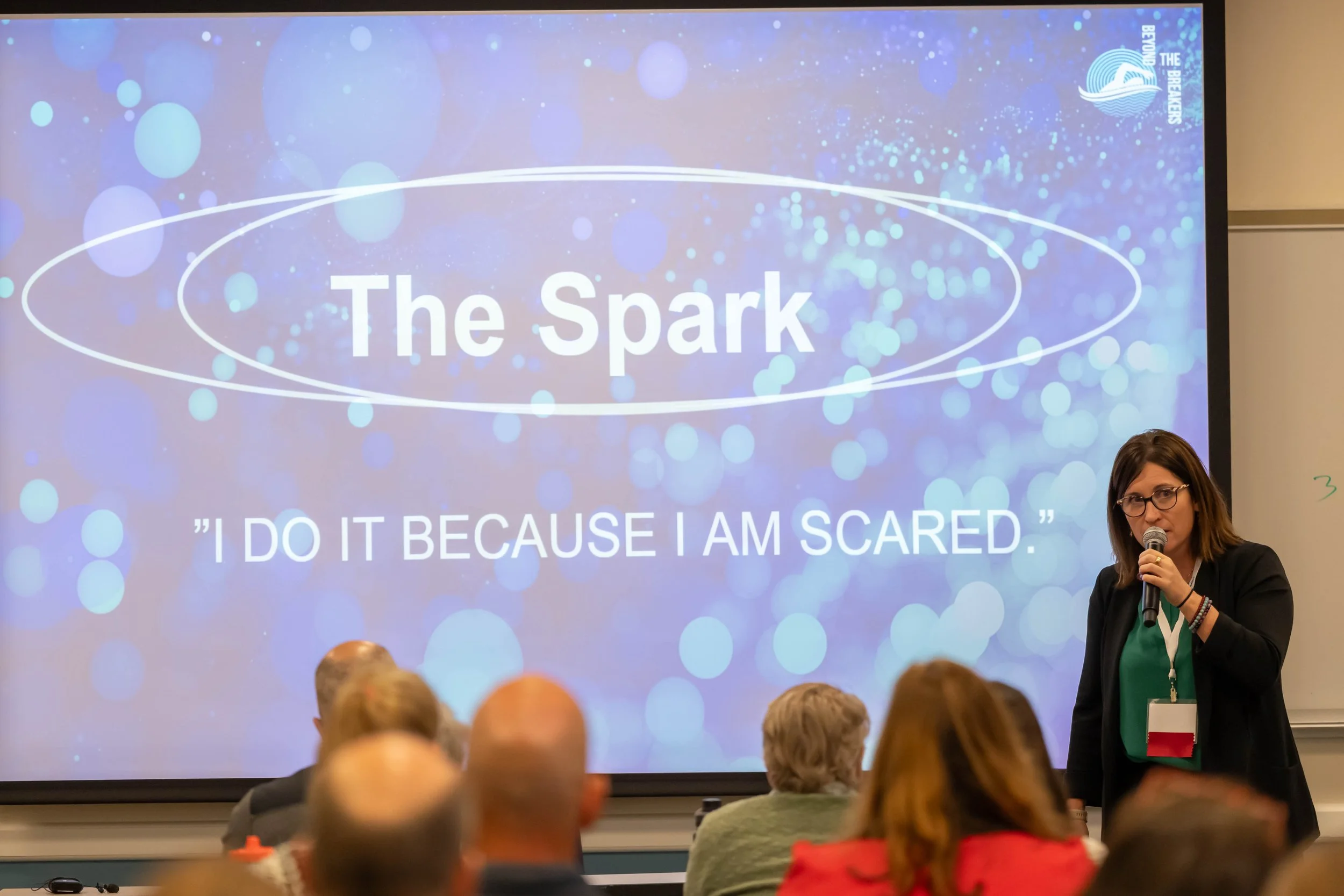
Photo Credit Helen Cogan Photography
But something shifted when she moved back to Boston as an adult. Looking to find her people and reconnect with her community, she joined a masters swimming group after twenty years away from the water. That decision led to an invitation to swim in the ocean with local swimmers, and it terrified her.
"I remember that day I brought my wetsuit and went, and I think I almost tackled a couple of them in the water," Laurie recalled during our conversation. "It was embarrassing, but they somehow invited me back."
The turning point came during a conversation with swimmer Sam Levenson. When Laurie asked why Sam swam to the JFK Library when it scared her, Sam's response changed everything: "I do it because it scares me."
That moment became Laurie’s epiphany. She realized she'd spent her entire life reinforcing comfort, and comfort wasn't where growth happened.
The Decision That Changed Everything
Shortly after that conversation, Laurie called her friend Polly and asked if she wanted to swim the Triple Crown. This wasn't a casual suggestion. At that point, she had barely done any marathon swimming. She had no confidence she could complete the swims. But she was committed to changing her relationship with fear.
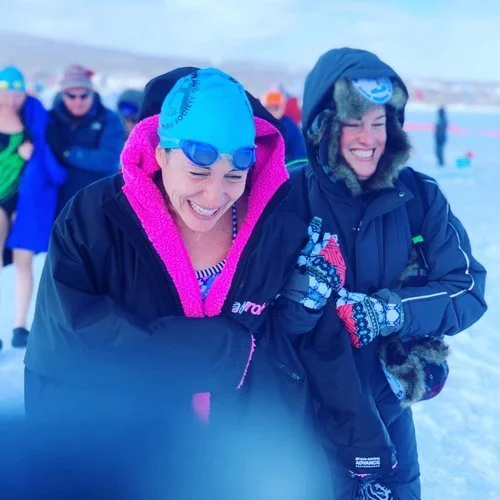
"I hadn't done a ton of swimming at that point, but we signed up for those three swims with no confidence that I could complete them," she explained. "And that became my quest in a sense to overcome my fear. But through my experience, I learned that it wasn't about overcoming fear. It was about learning to thrive in my fear."
The English Channel swim tested everything she'd learned. Her pilot, Eddie Spelling, initially told her to go home. The forecast showed cyclonic winds and rough seas. These were conditions he'd rarely allowed a swimmer to attempt.
But Laurie and her team advocated respectfully for a chance. When the cyclone passed overnight and a window of safety opened, she found herself at the dock not knowing if she'd actually swim. When she finally got in the water, fear hit hard.
Then something shifted.
The Counterbalance: Fear Plus Gratitude
About two hours into the swim, as waves tossed her around, Laurie made a conscious choice. She decided to embrace the fear and the gratitude at the same time.
"Something switched in my head and I thought, I'm cold. It's rough out there. If something doesn't change in my brain right now, I'm not getting to the other side," she said. "Once I recognized that I could let my fear exist alongside gratitude and empowerment and community, all those things at once, it was like the world opened up for me."
This concept of counterbalance is central to her psychology work with athletes. The brain doesn't need to choose between fear and confidence. It can hold both simultaneously, along with gratitude and possibility.
It's a learnable skill, and Laurie has backed it up with research. Studies show that mindset actually changes your biology. Your heart function changes. The way blood moves through your system changes. The pathways in your brain reorganize. People who maintain a balanced mindset around fear and anxiety actually outlive those with purely negative attributions to their stress.
What Psychology Reveals About Dark Patches
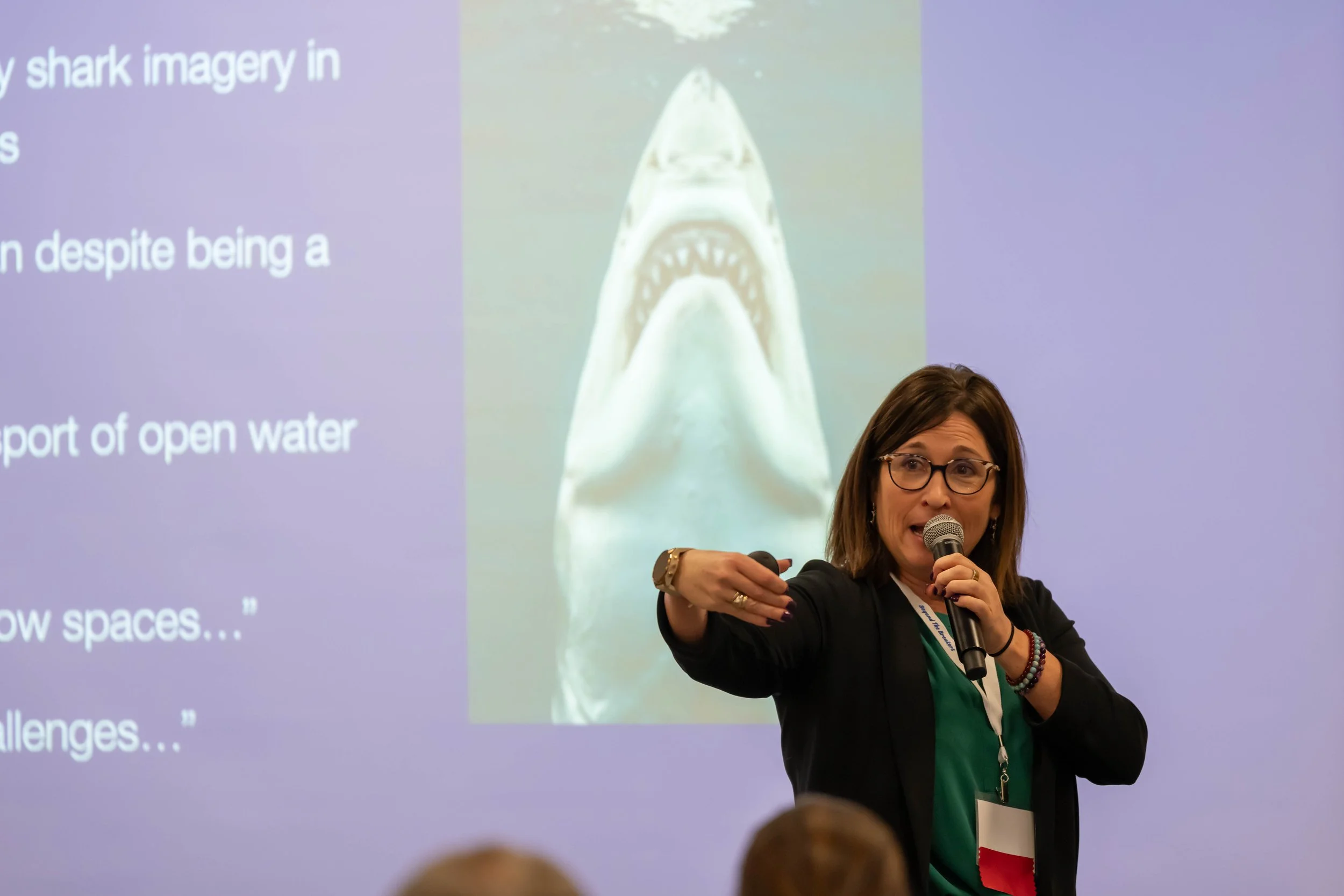
Photo Credit Helen Cogan Photography
Every open water swimmer knows them: those moments during a long swim where nothing's working, the brain screams to stop, and you question why you're doing this at all.
Laurie explains what's happening from a neuroscience perspective. Your amygdala, the part of your brain responsible for threat detection, kicks into high gear. Its job is to keep you safe, and any discomfort triggers a signal: "Get me out of here. Shut down."
"90 to 99 percent of things in my head are not real," she said about these moments. "For the most part, a lot of what's happening in my brain is just a fear response."
The key is recognition. When you can identify that your amygdala is firing, you activate your frontal lobe. This single act of awareness is itself an intervention. It downgrades the fear response and helps you see things more clearly.
When you're in fear mode, your vision narrows. You can't hear your crew properly. You can't visualize the finish. But when you recognize what's happening and engage your thinking brain, everything changes.
Practical Tools for Marathon Swimmers
Laurie shared several tools that open water swimmers can use during training and racing:
Recognize and accept. Don't fight your fear. Acknowledge it's there. You can do badass things while you're scared. You can accomplish extraordinary goals while your anxiety is present.
Use the counterbalance. When fear arises, consciously bring in gratitude, empowerment, and community. Hold all of these emotions at once. This balanced state is your optimized performance state.
Prepare relentlessly. Laurie approached her channel swims with a team that included a coach, a nutritionist, a trainer, and an accountability partner. Preparation becomes armor against doubt. When the going gets tough, you fall back on the training you've done.
Think about specific details. During her channel swim, Laurie’s coach Charlotte Brynn had her focus on her earlobes when everything hurt. It sounds simple, but it works. When your mind spirals into dark territory, give it something specific and present to focus on.
Find your community. You don't train alone, and you shouldn't swim alone. Having training partners, crew, and a supportive community fundamentally changes your ability to push through.
What Success Actually Means
One thing that stood out in her story was the shift in how she defines a successful swim. Early in her athletic career, success meant hitting time goals and beating previous records. By the time she reached the English Channel, she'd completely reframed that definition.
She finished the channel swim significantly slower than her time goals. It didn't matter. She'd had the best swim of her life because she'd let go of the metrics that had previously defined success.
"I went in there having time goals of what I wanted to do and I didn't hit them at all," she said. "But I got to swim in the English Channel. I got to swim in the same space that Trudy Ederle and Sarah Thomas and all the greats had swam before, and I was having a blast."
For marathon and open water swimmers, Laurie’s framework for success is transformative: Did you have fun? Were you proud of your effort? Did you get out safely?
Those are the metrics that matter.
Beyond the Breakers 2026
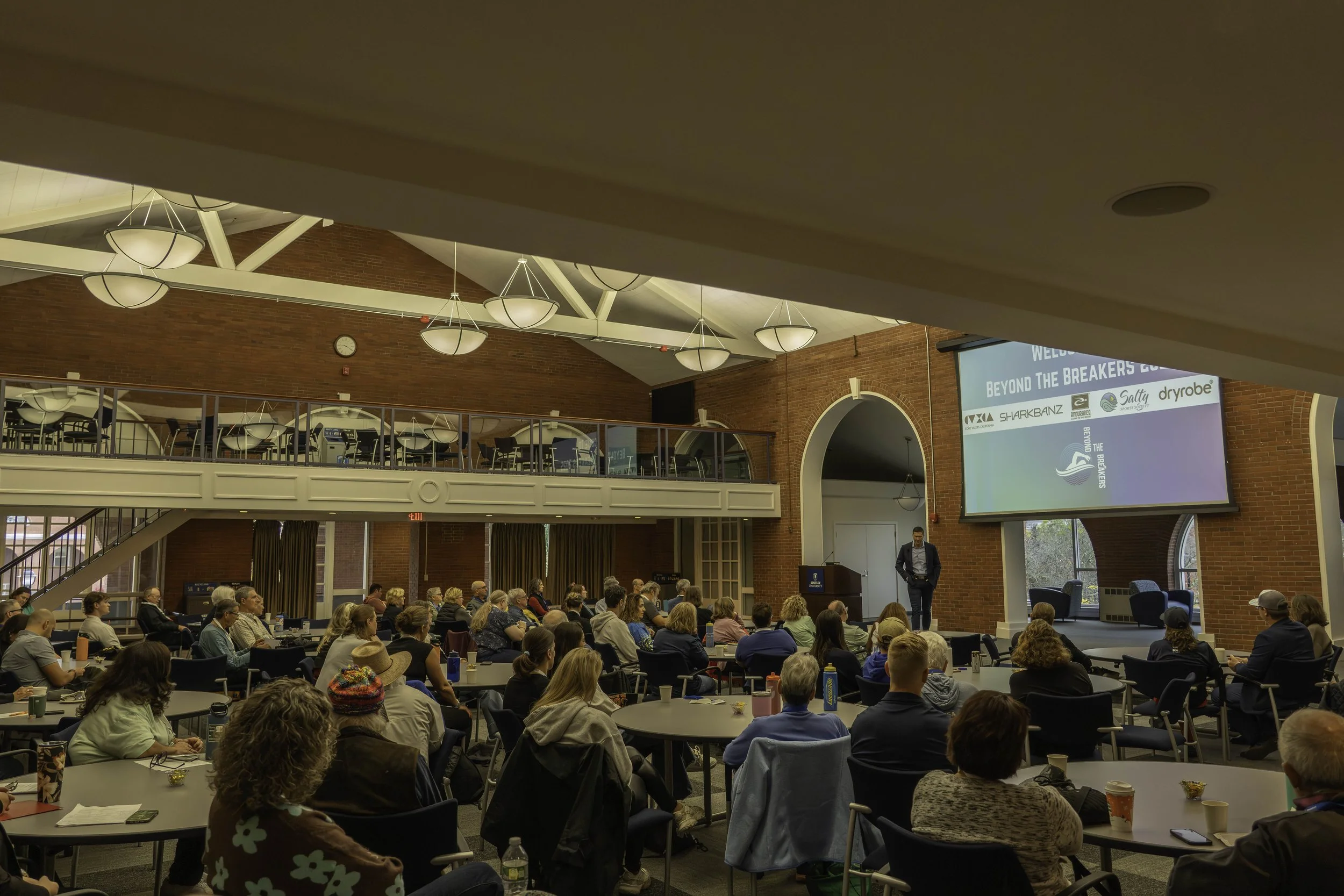
Laurie was a fan favorite at Beyond the Breakers last year when she spoke about fear. This year, she's returning with a deeper dive into thriving in fear, with more interactive elements and a focus on how community and connection fuel our ability to push through challenges.
"We're wired for connection. We heal through connection," she explained. "I really want to take it to the next level and make the talk a continuation of what I did, but go deeper with more interaction."
She's particularly excited to hear from other speakers like Sarah Thomas, Elaine Howley, and Suzanne Martin about their mindset approaches to historic swims. The parallels between what these elite swimmers do mentally and what she teaches her clients who don't swim at all are striking.
"I steal their mental tricks and bring them to my clients who don't swim because they're translatable skills," Laurie said. "I use swimming metaphors and swimming takeaways with more than half, maybe 80 to 90 percent of the clients that I work with."
The Bottom Line
Dr. Laurie Craigen's story isn't just about swimming the English Channel in brutal conditions. It's about learning that fear doesn't have to be an obstacle. It can be information. It can be motivation. It can be your greatest teacher.
Whether you're training for your first open water swim or chasing a world-class goal, her approach applies. Get to know your fear. Befriend it. Prepare relentlessly. Find your community. And remember that you can do extraordinary things while you're scared.
That's the essence of thriving in fear, and it's a lesson that extends far beyond the water.