
Going Long With Dan Daly, CSCS
Dan Daly on Why Swimmers Quit Strength Training Before It Ever Has a Chance to Work
I have watched swimmers quit dryland training more times than I can count. And I will be honest, I have done it myself several times!
You start a new routine, you get sore and then you feel heavy in the water. Your times look worse and rather than giving the strength training the time it needs, you stop.
Dan Daly has watched this happen for twenty years. He’s also watched the swimmers who stuck with it long enough to get past that initial adaptation and come out the other side feeling stronger, more resilient, and faster than they would have been otherwise. The difference between those two groups is almost never talent or dedication and is almost always knowledge.
I sat down with Dan for an episode of Going Long, our interview series here at Beyond The Breakers. I’ve had Dan on the Beyond The Breakers stage for three years running. His sessions are always among the highest-rated of the weekend. I wanted to understand why, in a sport full of coaches, he keeps being the person this community comes back to.
Who Is Dan Daly?
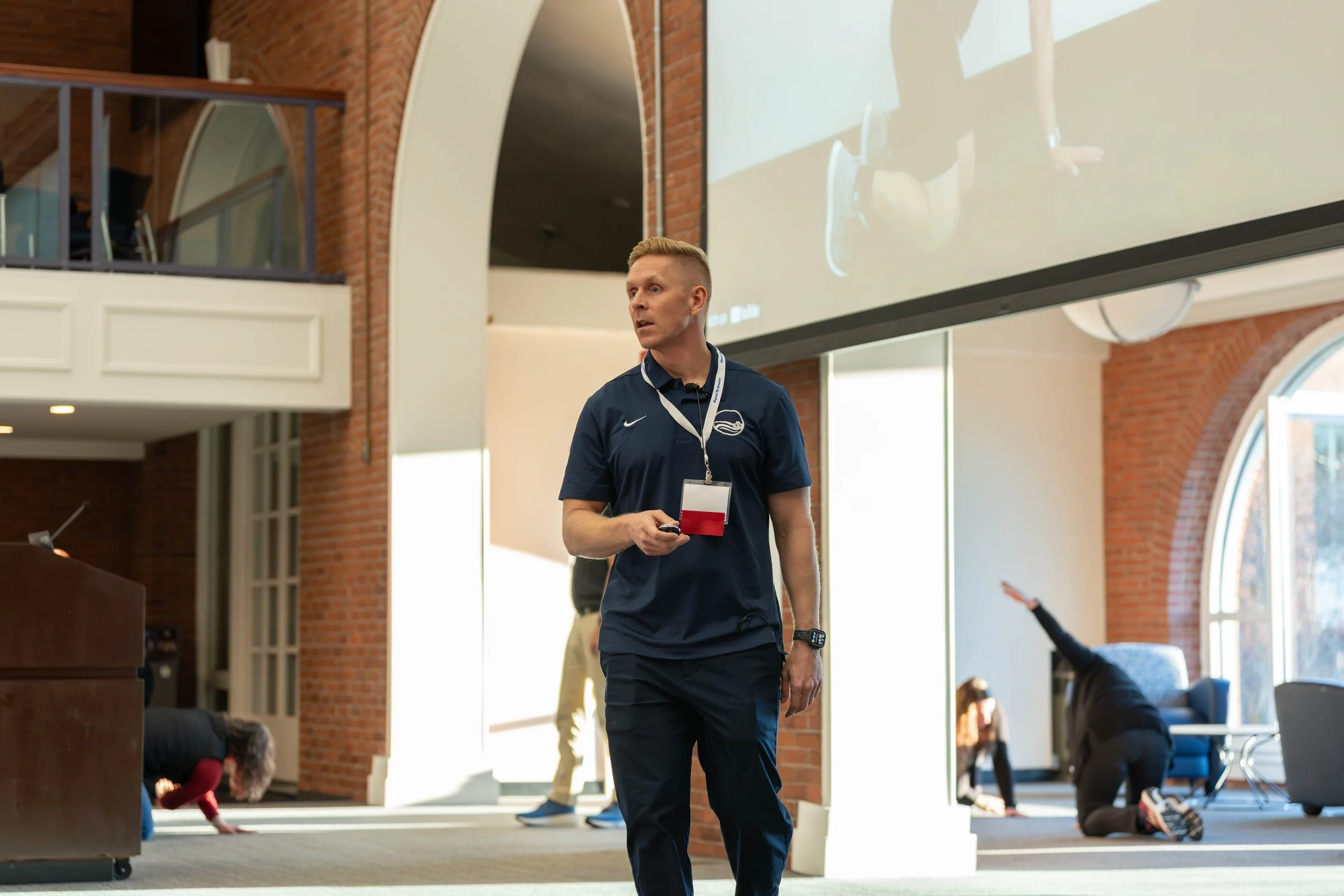
Photo Credit: Helen Cogan Photography
Dan Daly is a Certified Strength and Conditioning Specialist (CSCS) with over 20 years of coaching experience and more than 35 years as a competitive swimmer.
He was an All-American sprinter, a Division I athlete, and a Division II All-American and national finalist. He captained the Men’s Varsity Swim Team at West Chester University, where he earned a degree in Kinesiology and Nutrition.
He is the founder of Train Daly,a performance coaching business based in New York City. He is the co-creator of Equinox’s EQX H2O dryland and swim technique program and the author of Chapter 13: Core Training for Swimmers in the National Strength and Conditioning Association’s textbook, Developing the Core.
His work has been featured in Women’s Health, Men’s Health, Shape, and Muscle & Fitness. He coaches swimmers from 50-meter sprints all the way to 45-kilometer open water marathon swims and the Triple Crown of Open Water Swimming.
He is back at Beyond The Breakers for his third consecutive year. He is, as I told him on camera, the guy when it comes to strength and conditioning in the open water world.
Two Worlds, One Coach
Dan’s path to becoming the person who bridges swimming and strength training is not a straight line. It starts with sprinting.
He swam Division I and Division II in college, competing primarily as a sprinter. His teammates saw him as the person in the weight room who knew what he was doing. When he transferred to West Chester University to study Kinesiology, he leaned further into the strength and conditioning side, working with soccer, lacrosse, and hockey teams before finding his way back to swimming.
The open water piece came later. His uncle asked if he and his wife wanted to participate in an English Channel relay. They said yes before fully understanding what that commitment would involve. Dan ended up coaching his uncle through the process — and his uncle went on to complete the Triple Crown of Open Water Swimming. Dan did his first 10K in the Hudson River and he also raced in the Escape from Alcatraz triathlon. He started doing shorter open water events and realized he loved what the sport was doing to his relationship with swimming.
"It got me out of the pool a little bit," he said. "It gave me a new challenge. And it seems like a lot of middle-aged post-college athletes take on marathons and triathlons and open water swimming because they’re comfortable in those worlds — and for me that was the water. It opened up a whole other world of what swimming could be."
The result of putting those two worlds together, the sprint swimmer and the strength coach, is something that almost nobody else in open water swimming offers. Dan made that point himself in the interview.
"I can’t think of anyone in the open water community who’s a strength and conditioning coach and also has experience in open water swimming," he said. "In the pool world, I’m seeing more swim coaches who are marrying the two. In open water, it’s smaller and more niche. And open water swimmers could be a lot smarter about strength conditioning."
The Most Common Mistake
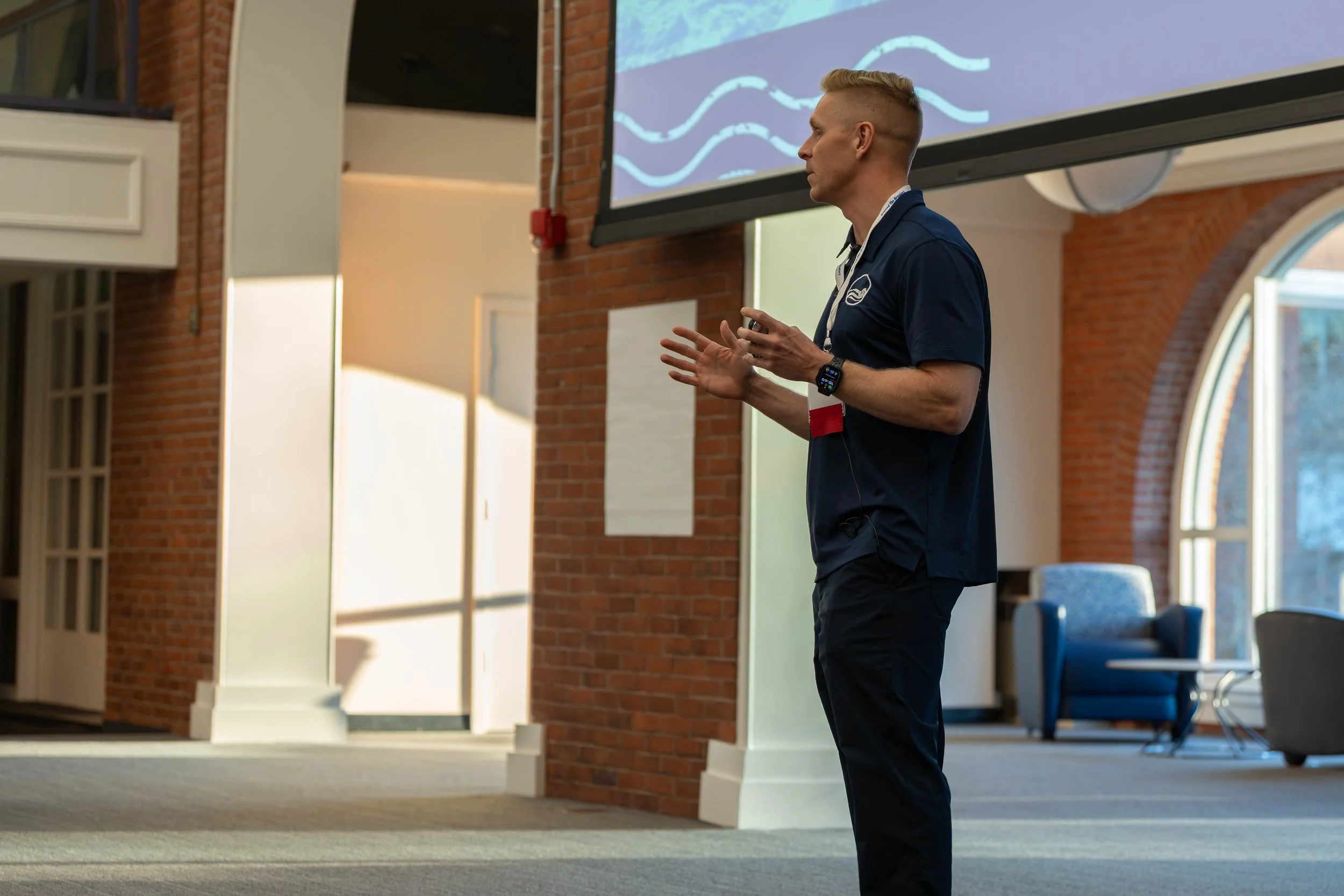
Photo Credit: Helen Cogan Photography
I asked Dan what he sees over and over when swimmers try to add strength training on their own. His answer was the same pattern he’s been watching for two decades.
"They’re doing way too much volume. They’re training body parts instead of movements. They’re sore. They attribute that soreness to a lack of mobility. They attribute the soreness and the lack of mobility to a decrease in performance. And then they bail on the plan. It’s always one step back and then just stop. You need to give it a chance. You need to know what the minimum effective dose is."
— Dan Daly
The phrase “minimum effective dose” is one I’ve heard Dan use more than once. It’s not about doing less for the sake of doing less. It’s about finding the entry point that allows strength training to complement what you’re doing in the water rather than compete with it.
He said something that I think a lot of swimmers are afraid to hear: if you increase your pool volume, you’ll also experience a temporary decrease in performance. The same thing happens with strength training. The difference is that with pool training, swimmers are comfortable with that adaptation period. With strength training, they’re not. So they quit.
"If you give it a shot for one to three months, you’re going to begin to adapt," he said. "And you’re going to see positive improvements in the water that you can directly link to what you’re doing in the gym."
Why It Matters More as You Age
Dan’s session this year at Beyond The Breakers is called The Missing Piece: Why Swimmers Need Strength, Power, and Muscle as They Age. He chose the topic because he’s seen it play out in his own training and in the athletes he coaches: the older you get, the more strength training matters, not less.
"Performance is relative for all ages," he said. "And performance is relative in the gym as well. I want to help people find the entry point for what performance means to them."
He talked about how a glute bridge done by a 70-year-old and a kettlebell swing done by a 40-year-old are functionally the same movement pattern at different doses. The 70-year-old is doing exactly the right version for where they are. Neither is wrong. Both are building the same foundation.
"While you might see me jumping across the floor or swinging a huge kettlebell, that same version could be the 70-year-old who wants to finish the Triple Crown doing glute bridges on their back. That’s a very similar movement. Maybe this is the dose I need, and that’s the dose that person needs."
— Dan Daly
The framing that strength training exists on a spectrum and that everyone has an entry point is what I think makes Dan’s sessions at BTB land the way they do. He’s not talking to elite athletes only. He’s talking to the whole room.
What Two Years at BTB Has Taught Him
Dan has been on the Beyond The Breakers stage since Year 1. I asked him what he’s learned about this community from standing in front of it.
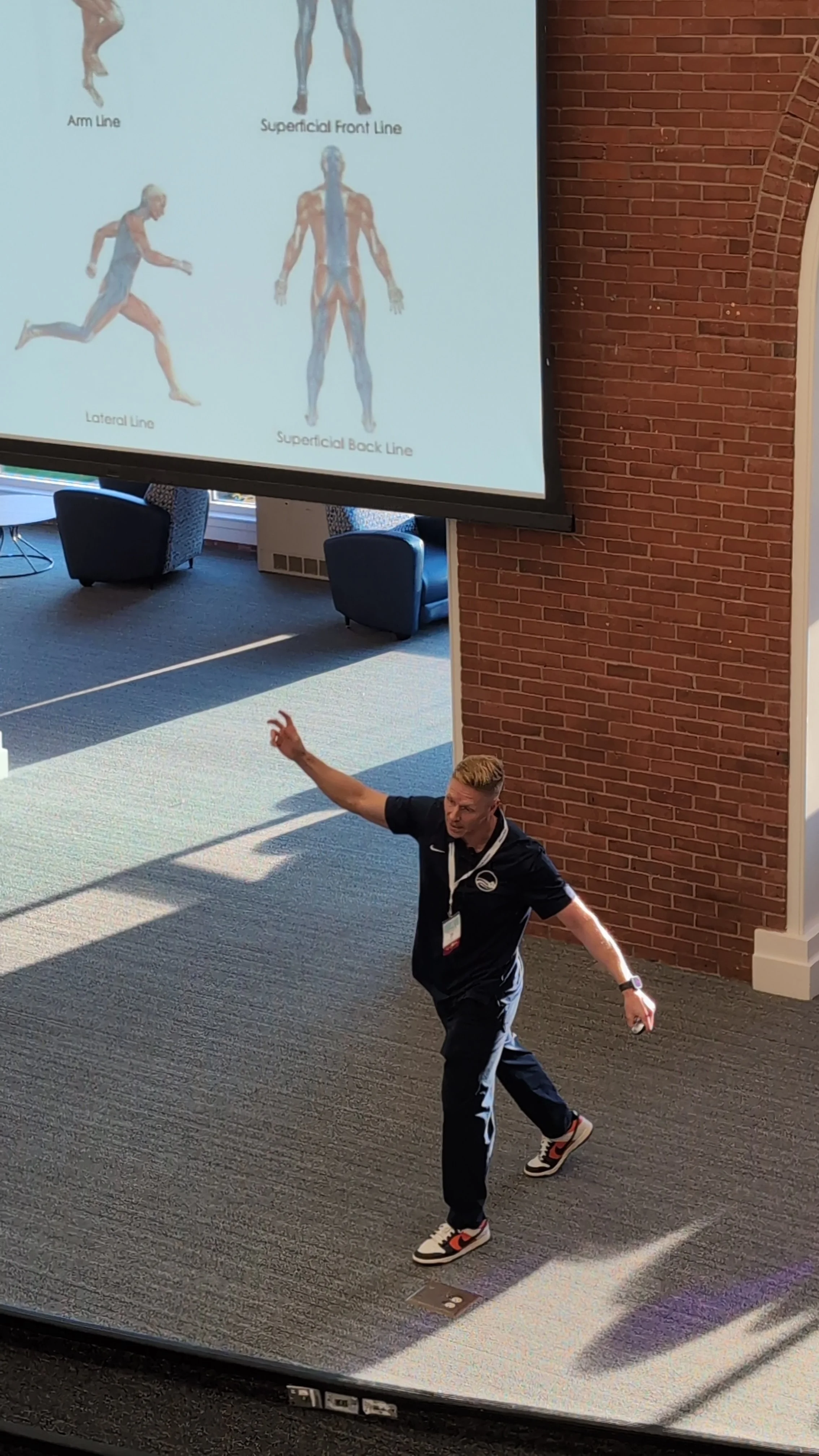
Photo Credit: Helen Cogan Photography
In Year 1, he went in with a heavy evidence-based approach. He wanted to build the case for strength training using research. He found the community was more open to new ideas than he expected. There wasn’t the debate and skepticism he sometimes encounters in pure strength conditioning circles.
In Year 2, he got people out of their seats. The session became practical. He demonstrated movements, had attendees try them, made it interactive. One moment he mentioned stood out, a woman came up to him after the session and said she couldn’t do the exercises he’d demonstrated, particularly the jumps and squats. They had a brief conversation about finding versions of those movements that she could do. That conversation is what’s shaping Year 3.
"A theme for this year will be talking about how this is all on a spectrum," he said. "And while you might see me jumping across the floor, that same movement exists for everyone, at whatever dose makes sense for them."
Why join this year
Dan Daly practices what he preaches. He swims. He lifts. He coaches swimmers in New York and remotely around the world and in Hungary. He competes as a masters swimmer. He is both the person who could give you a world-class strength and conditioning program and the person who understands exactly how it needs to translate to open water performance.
If you have never done a single dryland session, his session in November is for you. If you have tried it and quit, it is especially for you. And if you are someone who thinks that at your age, strength training is not worth the effort, make sure to sit in on Dan’s session!