
Going Long With Peter Plavec
Peter Plavec on Cold Water, Starting Late, and What Happens When You Find the Thing That Was Meant for You
The first time Peter Plavec got into cold water, he swam about 20 meters and turned around.
The man he was trying to follow kept going. Peter stood on the bank and watched, completely soaked, heart pounding, water temperature somewhere around three or four degrees Celsius.
He was in his early 30s. He had never swum competitively and he had no plan to. Standing on that bank watching someone do something he didn’t yet know how to do, he felt something click.
"I had just one thing in my mind," he told me. "How can I be that good like he is?"
Just 5 years later, Peter Plavec was an ice swimming world champion.
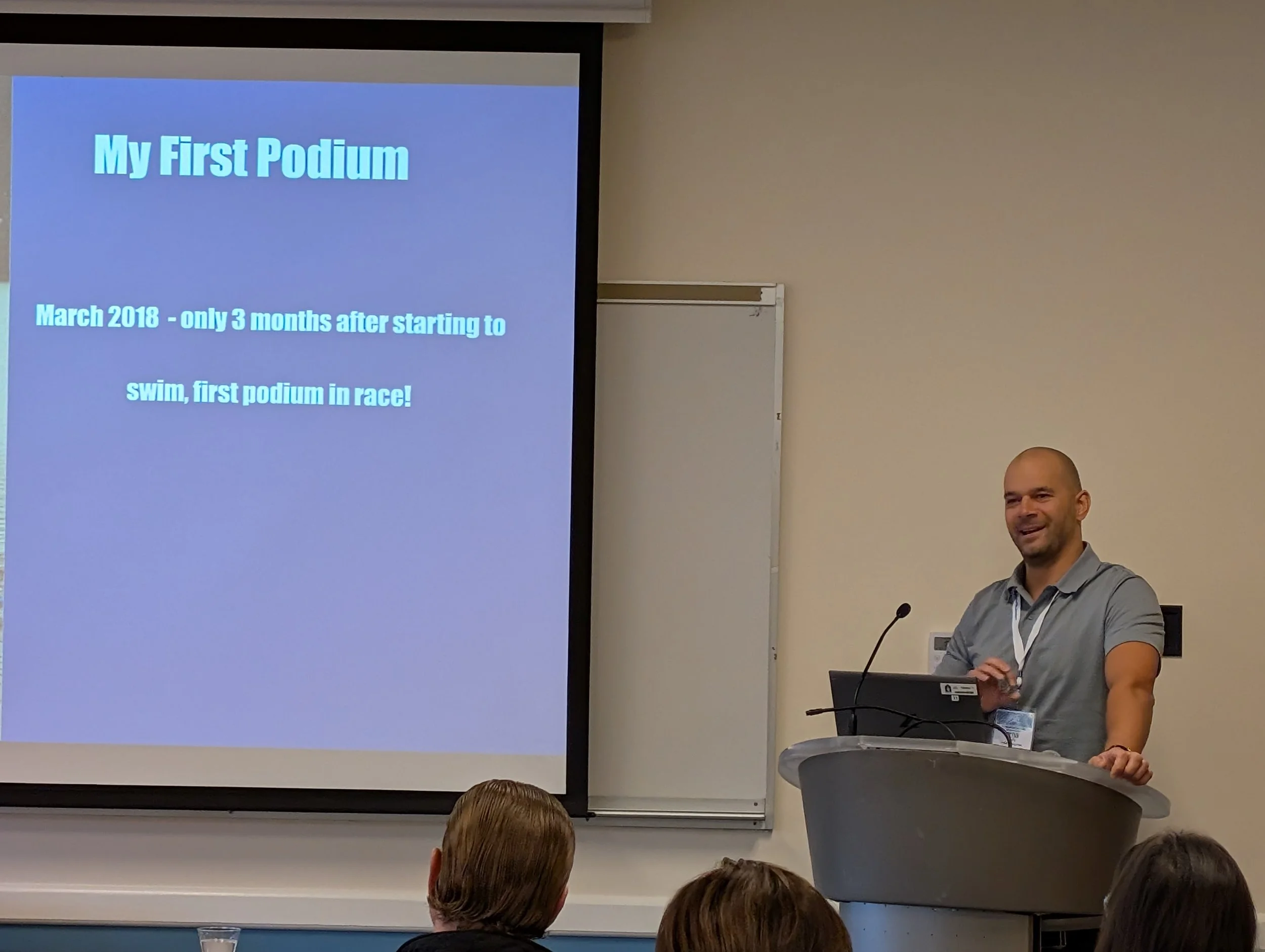
Photo Credit: Helen Cogan Photography
I sat down with Peter for another episode of Going Long, our interview series here at Beyond The Breakers. His story is one of the more remarkable ones in this sport, not because of the records, but because of what the records say about what’s possible when someone finds the thing they were meant to do, even if they find it thirty years after everyone else started.
Who Is Peter Plavec?
Peter Plavec is a Slovak open water and ice swimmer based in Vienna, Austria.He is a IWSA World Champion and World Record Holder in the 1000m freestyle in his age group,and a member of the first four-person team in history to complete a two-way North Channel relay.
He is a Slovak national champion in long-distance swimming and he completed an ice mile on January 19, 2020, in Burghausen, Germany, in water at 4.43°C with air temperature at 2.00°C, finishing in 34 minutes and 9 seconds. He completed the 27km Batalla de Rande marathon swim in the Atlantic Ocean without a wetsuit, finishing as the 10th fastest man without a wetsuit in that event.
He has over 100,000 followers on Instagram,where he has posted every single day for five years. He started swimming at the end of 2017 or beginning of 2018, with no prior competitive swim background.
The First Dip
Peter grew up in Komárno, Slovakia, near the Hungarian border, and moved to Vienna as an adult. By his own description, before he found swimming he was working hard, sleeping poorly, and not taking great care of himself. He wasn’t looking for a sport. He needed a reset.
He read a book about ice swimming and the idea appealed to him. He found a man named, Josef Köberl, in Vienna who was doing it professionally and went to meet him. This was Peter’s introduction to Ice Swimming!
"We didn’t talk before about how it would look like," Peter told me. "So we just went into the water and he just swam to the other side of the river. And I was just — man, where is he going?"
Peter made it about 20 meters in breaststroke before turning back. Josef completed his training while Peter waited.
He wasn’t discouraged, Peter was fascinated.
"I was thinking the whole time only about how can I be that good like he is. I was fascinated — that you go into the ice cold water and you just swim with a crazy speed, and then you turn, you come back, you feel fresh, you feel amazing. I just wanted to do exactly the same thing."
— Peter Plavec
He found a swim coach and learned freestyle from scratch. He started going back to the cold water more and more often, staying in longer each time. He began training twice a week, then three times, then four. Within a few months he was swimming 300 to 400 meters without trouble. A year into his training, he entered his first race.
The First Race
The race was in Austria in 2018. Peter had been swimming for less than a year and h had no idea how an ice swimming race worked.
"I was really scared," he said. "No idea how a swim race like this works."
There weren’t many swimmers in his age group at this event and he came away with a second and a third place finish.
"This motivated me even more to continue and to do this," he said. "Because I saw that there is good potential. If I improve more and more and more and do it more consistently, then there could be some very good results."
That consistency is the word that comes up over and over when you talk to Peter. He trains five to six times a week in the pool year-round, with one to two open water sessions added each week regardless of season along with two strength sessions and some mobility work. The same structure in winter as in summer, adjusted slightly in intensity depending on whether he’s preparing for short cold swims or longer marathon events.
The results speak for themselves. But the method is what he wants people to understand.
What the Back Injury Taught Him
I asked Peter about the obstacles he’d encountered on the way from that first Danube dip to the world championship podium. He mentioned something that I think most swimmers underestimate.
He got a serious lower back injury about a year before we spoke. It slowed his training down a bit but it taught him something that the pool alone couldn’t.
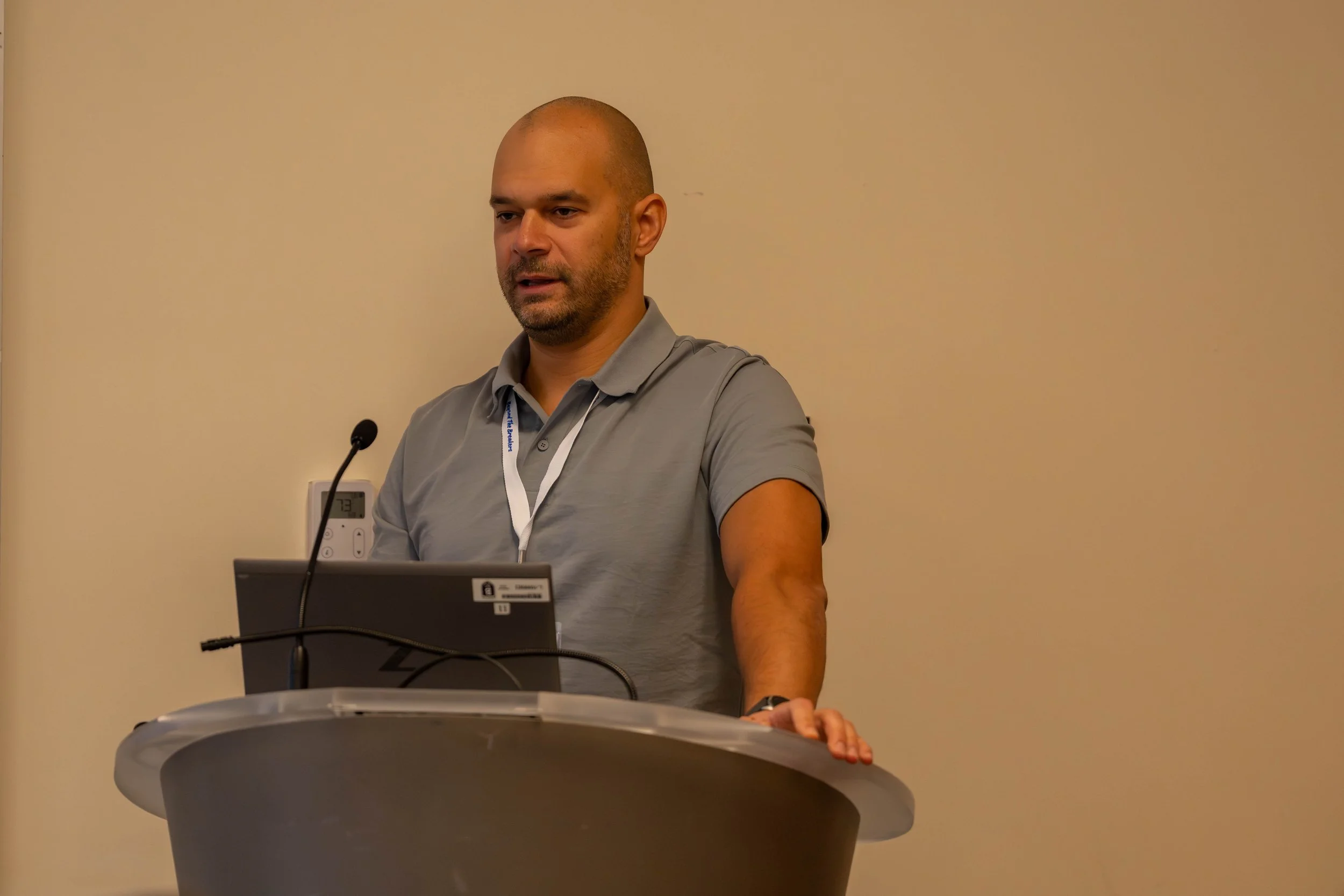
Photo Credit: Helen Cogan Photography
"It’s not enough to work hard in the pool. You need to also recover well and do some strength training to balance this whole thing. Sleep, nutrition, recovery, strength training — these are also very important and they can help you reach your goals much easier."
— Peter Plavec
He also made the point that strength training isn’t just about injury prevention or staying faster as you age. It’s about how you feel in the water.
"If your muscles are activated, if there are no weak points in your body, you will feel much more confident in the water as well," he said.
That tracks with everything Dan Daly talks about in his strength and conditioning sessions at Beyond The Breakers. It’s the same framework from two very different swimmers arriving at the same conclusion.
What He’s Doing Now
Peter has been coaching relay teams through English Channel and North Channel crossings. A group of five women crossed the English Channel a few days before we spoke. A group crossed the North Channel around the same time. None of them had significant cold water experience before he started working with them.
"They came with a background where they never tried cold water before," he said. "And they finished without problems."
What he learned from coaching those groups is what he’s building his BTB session around. Cold adaptation is not just for people who want to swim in ice water. It’s useful for any open water swimmer and it’s trainable, no matter your access to bodies of cold water nor the event you are training for.
Cold Adaptation: His Session at BTB 2026
Peter’s session at Beyond The Breakers 2026 is called Cold Adaptation: The Hidden Advantage for Open Water Swimmers. He was careful to say it’s not a session for extreme swimmers only.
"I would like to tell people how it’s possible to improve cold adaptations even if you don’t want to spend hours in the cold or if you don’t really have cold conditions near you," he said. "What are these small tips and tricks? How can you improve your cold adaptation?"
He described one of the women he coached who was based in California, no cold water nearby, no realistic way to train in anything close to North Channel temperatures. She finished her crossing. So did everyone else in the group.
"There is a possibility for everybody to train it, to adapt, and to learn how to deal with cold," he said.
What He Said About BTB
Last year was Peter’s first time at Beyond The Breakers. He came as a speaker. He told me he wasn’t sure what to expect but he knew he could talk about swimming for hours if someone gave him the opportunity.
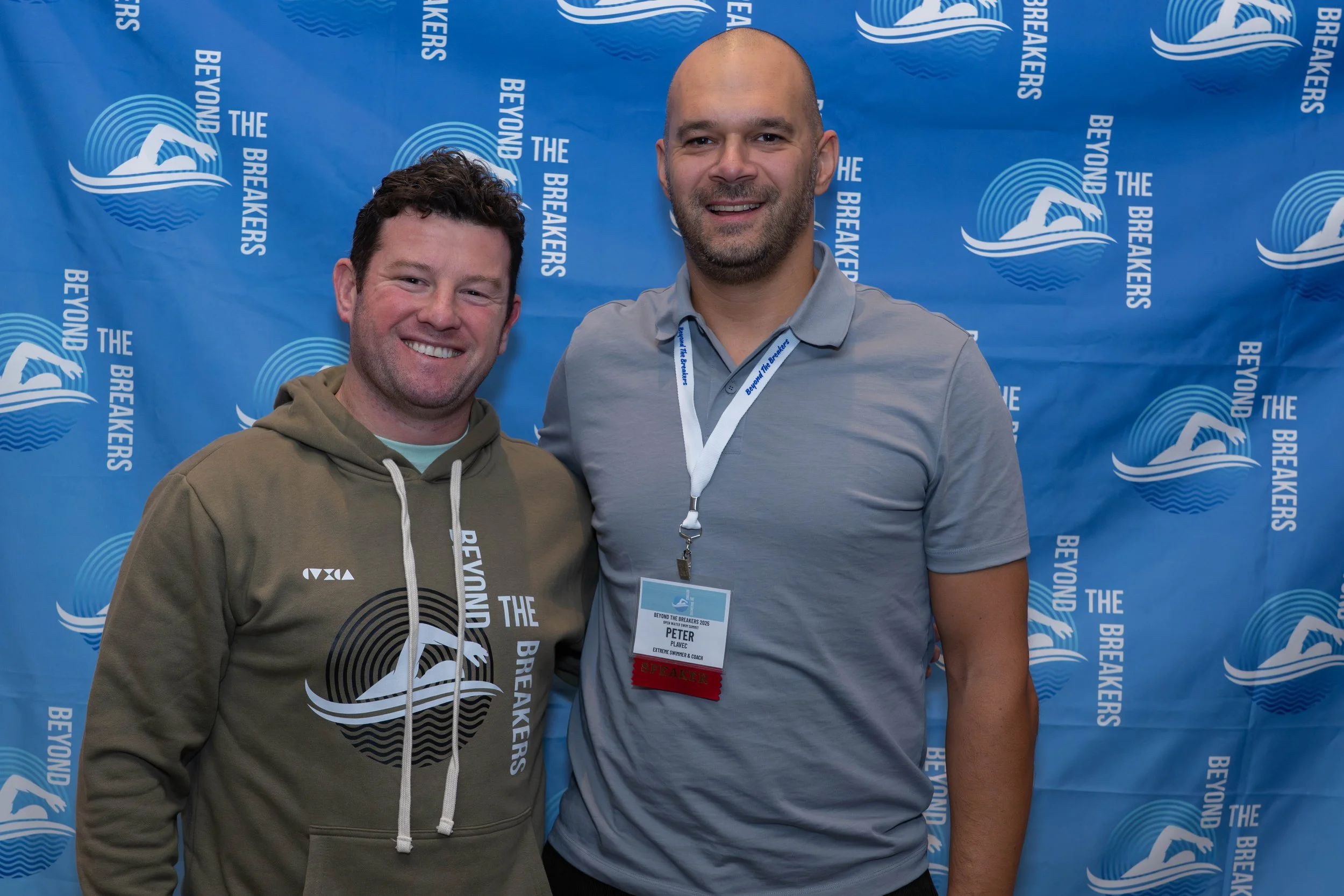
Photo Credit: Helen Cogan Photography
"I wanted to listen to the other speakers because I saw on the list there are a lot of very interesting people — very experienced swimmers, coaches, athletes who have a great background and a lot of experience to tell. And I also wanted to share a little bit about my story because I know I was inspired by other swimmers, and I think my story could inspire other people too."
The audience feedback after his session confirmed that it did. He is coming back this November.
What’s Possible
I asked Peter what it says about the limits of human potential that someone with no swim background in their early 30s can become a world champion in a few years.
He didn’t overthink the answer.
"There are no borders. If you have a dream, then you can reach all the dreams you have. You just need to work on it consistently and you need to love what you do."
— Peter Plavec
That’s it. That’s the whole framework. Find the thing. Work consistently and love the process. Don’t put a ceiling on it.
Peter Plavec swam 20 meters in the Danube in his early 30s and turned around. A few years later he was standing on a world championship podium with a world record to his name. He did it by going back to the cold water. Again and again and again.